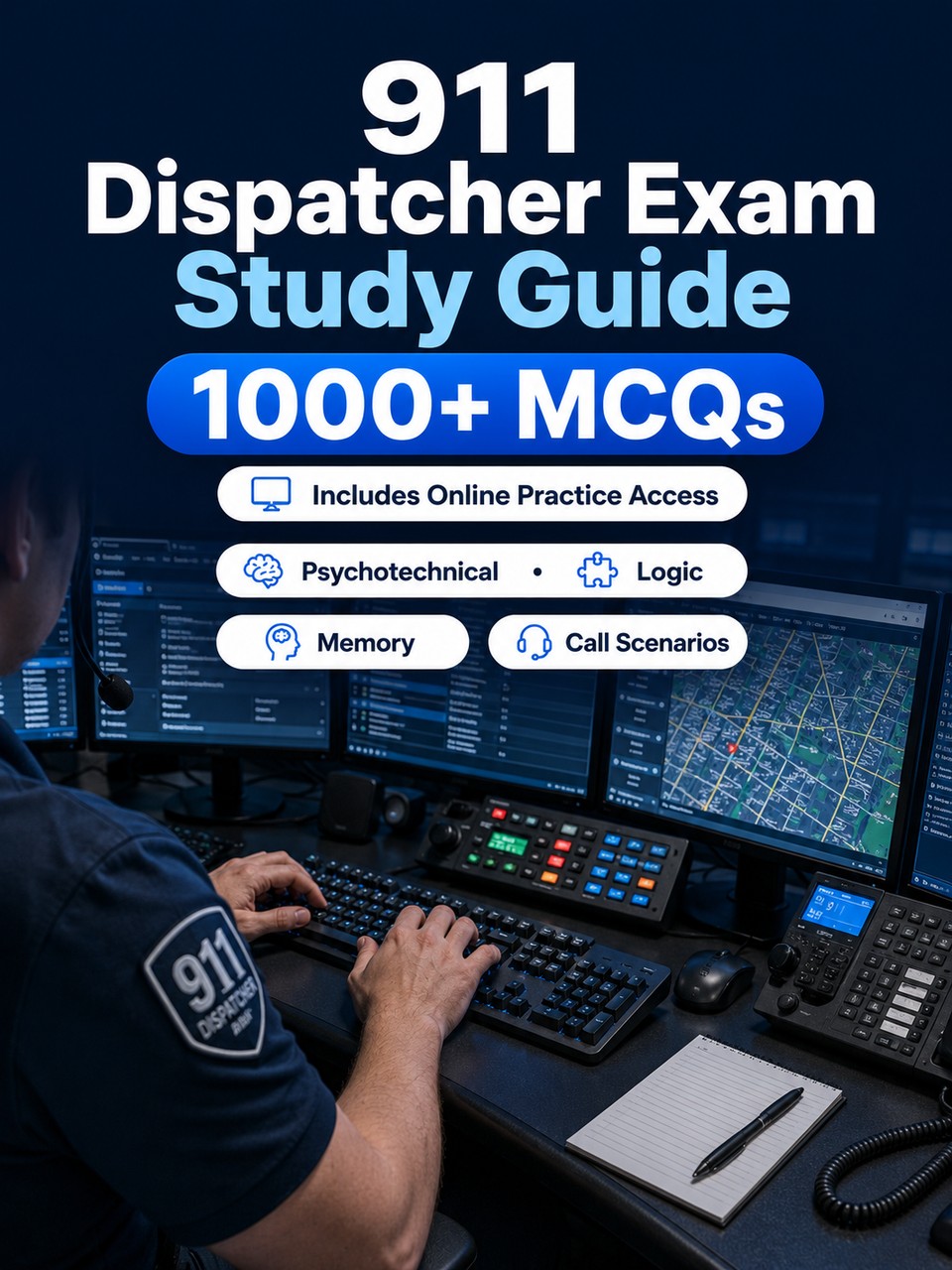
911 Dispatcher Exam Study Guide selection process
Becoming a 911 dispatcher requires navigating a rigorous multi-stage selection process designed to identify candidates who can perform under extreme pressure. This guide outlines every phase of the journey, ensuring you are fully prepared for the challenges ahead.
Written Examination and Skills Assessment
The selection process typically begins with a comprehensive written exam. This stage evaluates your aptitude for multitasking, memory recall, and rapid decision-making, which are critical for Public Safety Answering Point operations. You will be tested on your ability to handle emergency telecommunications infrastructure and radio communication codes.
To succeed, candidates must demonstrate proficiency in following Emergency Medical Dispatch protocols and understanding legal liability in emergency communications. Our printed prep book includes a QR code for online practice access, providing you with the tools to master these complex modules.
Psychotechnical and Personality Evaluations
Following the written test, candidates undergo psychotechnical assessments to determine their psychological suitability for high-stress environments. These evaluations focus on your emotional stability, crisis intervention capabilities, and your ability to remain calm during active shooter or mass casualty incident scenarios.
This stage is pass-fail and is often conducted by licensed professionals. The goal is to ensure that prospective dispatchers possess the resilience required to manage hazardous materials incidents and disaster management operations without compromising professional standards.
Oral Board Interview
The oral board interview is a face-to-face evaluation where a panel of supervisors and experienced dispatchers assess your communication skills and situational judgment. You will be asked to describe how you would handle specific call scenarios, ranging from routine requests to life-threatening emergencies.
Expect questions regarding Federal Communications Commission regulations and confidentiality laws. The panel evaluates your ability to articulate clear instructions and your commitment to public safety operational standards.
Physical and Medical Screening
While dispatching is a sedentary role, agencies require a medical clearance to ensure you are physically capable of performing the essential functions of the job. This includes a vision and hearing test, as well as a general physical examination to ensure you can withstand long shifts in an Emergency Operations Center.
Some jurisdictions may also include a basic physical agility or fitness component to ensure general health. This stage is mandatory for final clearance and is typically the final hurdle before the background investigation and final ranking.
Final Ranking and Selection
Once all stages are completed, candidates are placed on an eligibility list based on their cumulative scores. Agencies rank applicants according to their performance in the written, oral, and psychotechnical phases. Those at the top of the list are usually the first to receive conditional offers of employment.
Final selection is contingent upon a thorough background check, including criminal history and reference verification. Maintaining a high rank throughout the process is essential to securing your position as a public safety professional.
FAQ
- What is the most difficult part of the 911 dispatcher selection process?
- Most candidates find the multitasking and decision-making portions of the written exam to be the most challenging due to the time constraints and the complexity of the emergency scenarios presented.
- How long does the entire selection process take?
- The timeline varies significantly by agency, but the entire process from the initial written exam to the final ranking usually takes between three to six months.
- Do I need prior experience in emergency services to pass?
- No, prior experience is not required. The selection process is designed to test your aptitude and potential to learn, which is why utilizing a comprehensive study guide is vital for success.
- What happens if I fail one stage of the exam?
- The selection process is cumulative. Failing a critical stage, such as the psychotechnical evaluation or the oral board, typically results in immediate disqualification from the current recruitment cycle.