How to pass the 911 Dispatcher Exam Study Guide exam
Passing the 911 Dispatcher exam requires more than just memorizing protocols; it demands high-level cognitive multitasking and rapid decision-making skills. This guide provides a structured path to mastering the core competencies needed to excel in public safety communications.
Create a Structured Study Timeline
Success on the 911 dispatcher exam is built on consistency rather than last-minute cramming. Aim for a six-week preparation window, dedicating at least 60 to 90 minutes per day to your studies. Break your schedule into two-week blocks: focus on foundational knowledge in the first block, technical protocols in the second, and intensive mock testing in the final phase.
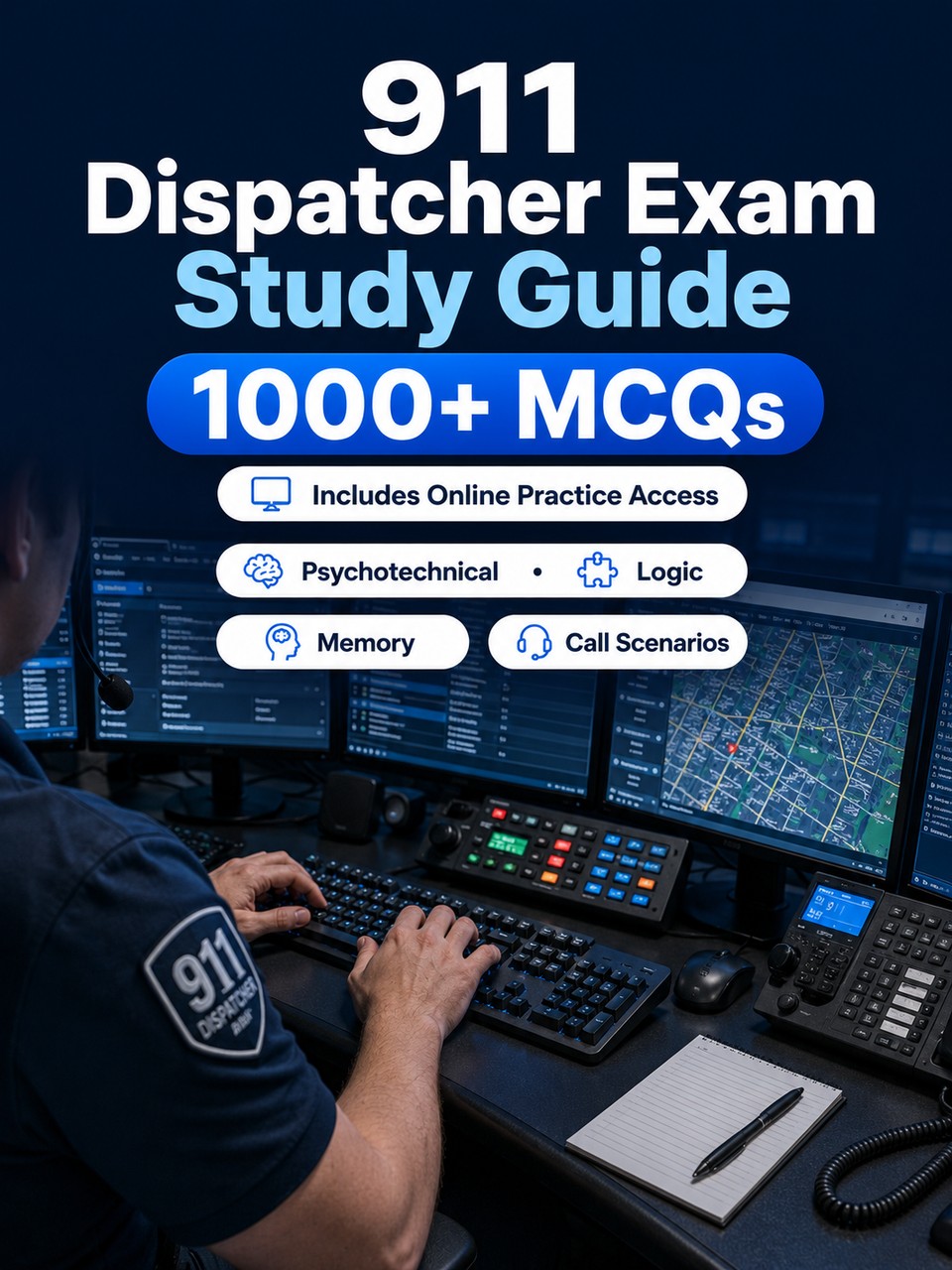
To maximize your efficiency, our printed prep book includes exclusive online practice access via a QR code found inside the cover. This allows you to bridge the gap between theoretical knowledge and the digital testing environment you will encounter on exam day.
Prioritize Core Competencies
The exam tests a wide range of skills, from Emergency Medical Dispatch (EMD) protocols to legal liability and FCC regulations. Prioritize your study time based on the weight of each section. High-stakes areas such as call prioritization, crisis intervention, and active shooter protocols should receive the most attention.
Do not overlook the technical aspects of the job, such as radio communication codes and hazardous materials response. While these topics may seem dry, they are essential for ensuring public safety and operational compliance within a Public Safety Answering Point (PSAP).
Master Multitasking and Decision Making
The most challenging part of the 911 dispatcher exam is the multitasking component. You will be expected to process incoming information while simultaneously managing data entry and radio traffic. Use our practice modules to simulate these high-pressure scenarios repeatedly.
Focus on improving your typing speed and accuracy, as these are critical for real-time documentation. Practice making quick, logical decisions based on incomplete information, which is a common requirement in emergency dispatching. Training your brain to switch tasks rapidly will significantly reduce your stress levels during the actual exam.
Identify and Address Weak Spots
Use mock exams to identify the specific areas where you consistently lose points. If you find that you are struggling with legal liability or confidentiality laws, revisit the relevant chapters in your study guide immediately. Do not move forward until you understand the underlying principles of the topic.
Keep a progress journal to track your scores on practice sets. By analyzing your errors, you can transform your weaknesses into strengths. Consistency in reviewing your mistakes is the fastest way to improve your overall test performance.
Simulate Real Exam Conditions
In the final two weeks before your exam, take full-length, timed mock exams in a quiet environment. This helps build the mental endurance required for a lengthy test session. Mimic the actual exam conditions as closely as possible, avoiding distractions and strictly adhering to time limits.
Reviewing your results under pressure will help you refine your pacing strategy. If you find yourself spending too much time on complex call scenarios, adjust your approach to ensure you have enough time to complete every section of the test.
FAQ
- How many hours should I study per day?
- We recommend 60 to 90 minutes of focused study time daily to ensure you cover all topics without burnout.
- What is the most difficult part of the exam?
- Most candidates find the multitasking and rapid decision-making sections the most challenging, as they require high cognitive load management.
- Does the study guide cover local protocols?
- The guide covers universal PSAP operational standards and federal regulations, which form the basis for almost all regional dispatching exams.
- How can I improve my typing speed for the exam?
- Consistent practice with our online typing modules will help you improve both your speed and accuracy in a high-pressure dispatch environment.