911 Dispatcher Exam Study Guide requirements
Becoming a 911 dispatcher is a rewarding career that requires a specific set of qualifications and a high level of professional readiness. Understanding these prerequisites is the first step toward succeeding in your examination and securing a role in public safety.
Educational and Residency Prerequisites
Most public safety agencies require a high school diploma or a General Education Development (GED) certificate as a minimum educational standard. Some jurisdictions may prefer candidates with additional college credits or relevant certifications in emergency telecommunications.
Regarding residency, candidates must typically be citizens of the country where they are applying. Many local agencies also require applicants to reside within a specific county or state to ensure familiarity with the local geography and infrastructure.
Background and Legal Standards
A clean criminal record is a non-negotiable requirement for all emergency dispatchers. Because you will handle sensitive data and access law enforcement databases, you must undergo a thorough background check, which often includes fingerprinting and a deep dive into your personal and professional history.
Any history of felony convictions or certain misdemeanors will typically result in immediate disqualification. Maintaining a high standard of personal integrity is essential for this role, as you will be expected to uphold strict confidentiality and privacy laws in emergency communications.
Medical and Physical Fitness Standards
Dispatchers must be able to perform under high-stress conditions, which necessitates good physical and mental health. Candidates are often required to pass a medical examination to ensure they can handle long shifts, sedentary work, and the intense auditory demands of the job.
Vision and hearing standards are critical, as you must accurately interpret radio communication codes and emergency signals. Some agencies also mandate psychological evaluations to ensure candidates possess the emotional resilience required for crisis intervention and de-escalation.
Language and Cognitive Skills
Fluency in English is mandatory for clear and concise communication during life-threatening incidents. You must be able to articulate instructions calmly and effectively, even when under extreme pressure from callers or during mass casualty incidents.
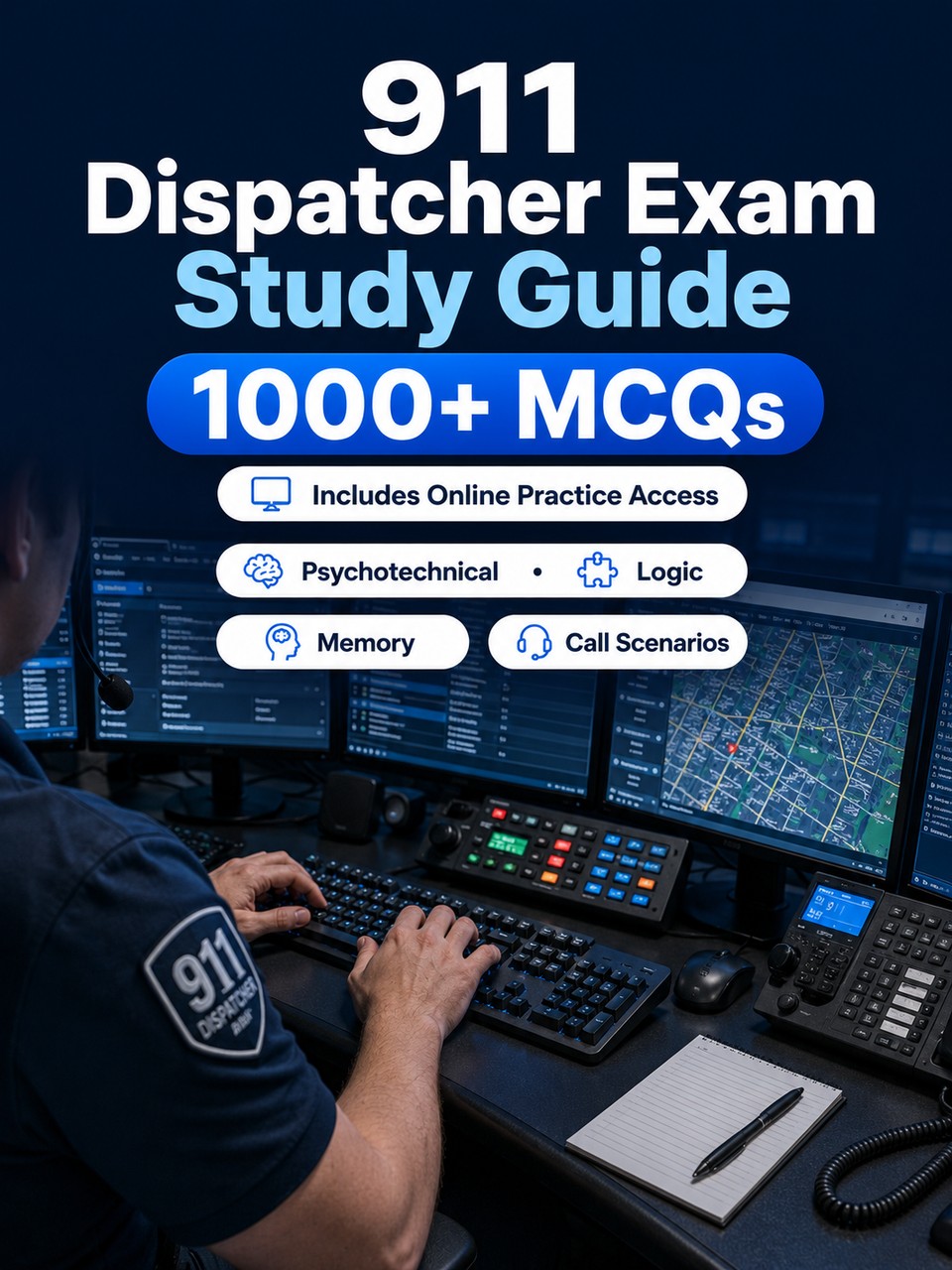
To help you meet these high standards, our printed 911 Dispatcher Exam Study Guide includes exclusive online practice access via a QR code inside the book. This digital component allows you to sharpen your multitasking, memory, and typing skills through 1000+ targeted practice questions.
FAQ
- Do I need a college degree to become a 911 dispatcher?
- Generally, a high school diploma or GED is the minimum requirement, though some agencies may prefer candidates with higher education or specialized training.
- Will a minor traffic violation disqualify me from the exam?
- Minor traffic violations usually do not disqualify you, but a history of serious offenses or a pattern of reckless behavior may be flagged during the background check.
- Are there specific physical fitness tests for dispatchers?
- While not as rigorous as police physical agility tests, you must pass a medical screening to ensure you can handle the sedentary yet high-stress nature of the role.
- How does the background check process work?
- The process typically involves a comprehensive review of your criminal history, employment references, and personal character to ensure you are suitable for a position of public trust.