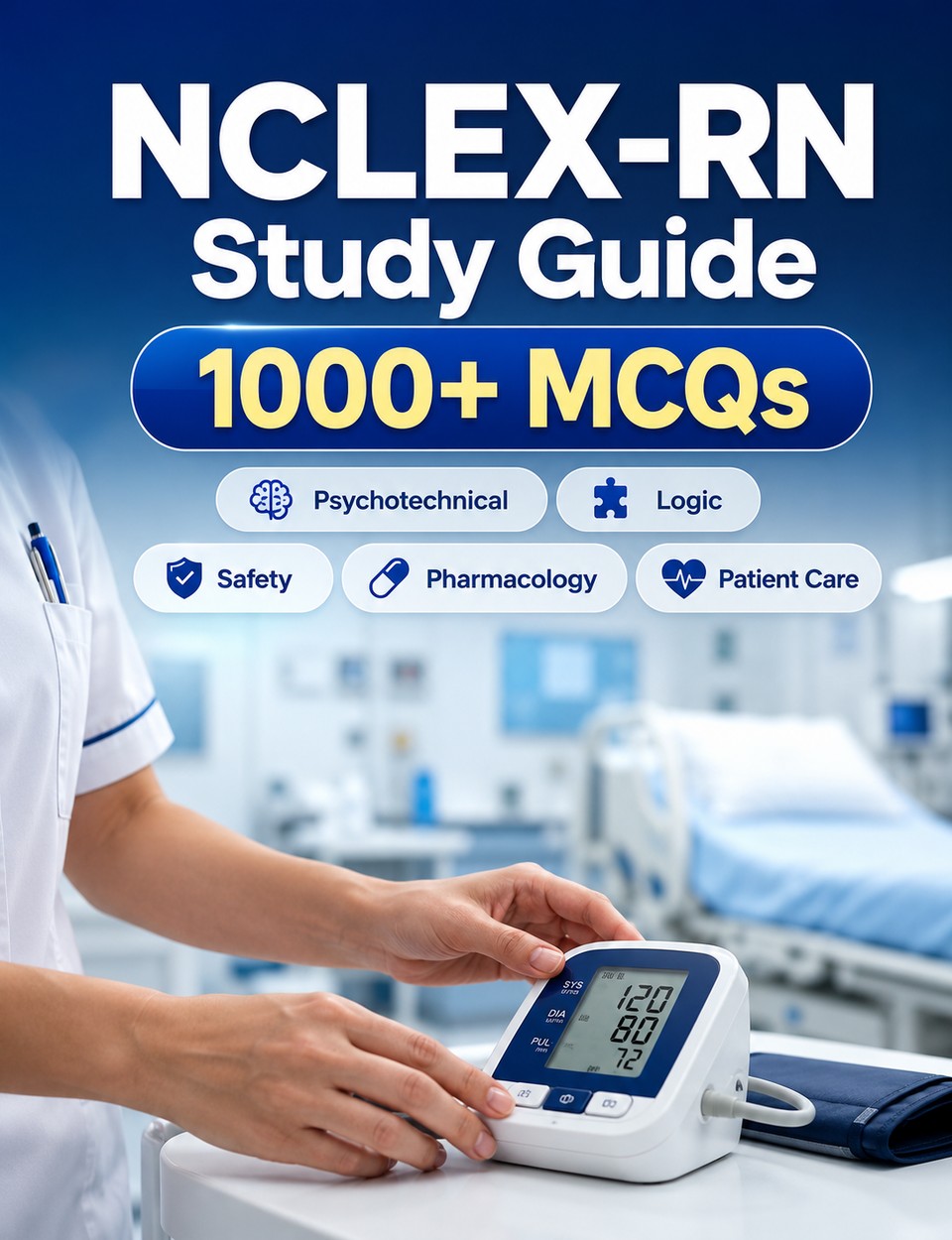
How to pass the NCLEX-RN Study Guide exam
Passing the NCLEX-RN is the final milestone in your journey to becoming a licensed Registered Nurse. With a strategic approach and the right resources, you can master the complex clinical judgment requirements needed to succeed on test day.
Create a Structured 8-Week Study Timeline
Success on the NCLEX-RN requires consistency rather than last-minute cramming. Dedicate at least 3 to 4 hours of focused study time daily over an 8-week period to cover the entire syllabus comprehensively. Break your schedule into weekly blocks, ensuring you rotate through core topics like Management of Care, Pharmacological Therapies, and Physiological Adaptation.
Use your first week to assess your baseline knowledge through a full-length diagnostic test. This will help you identify your weak spots immediately, allowing you to allocate more time to challenging areas like endocrine or neurological systems while reinforcing your existing strengths.
Prioritize Clinical Judgment and Safety
The modern NCLEX-RN emphasizes clinical judgment and the nursing process above rote memorization. When reviewing safety and infection control protocols, always ask yourself what the most immediate threat to the patient is. Focus on the hierarchy of needs and how to prioritize interventions during high-acuity scenarios.
To ensure you are fully prepared for these critical thinking questions, our printed prep book includes exclusive online practice access. Simply scan the QR code inside the book to unlock additional interactive simulations that mimic the actual exam interface and logic.
Mastering Pharmacology and Physiological Adaptation
Pharmacology and physiological adaptation represent a significant portion of the exam. Instead of memorizing long lists of drugs, focus on drug classes, their primary mechanisms of action, and the most common side effects that require nursing intervention. Understand the pathophysiology behind the symptoms to better predict patient responses.
For systems-based topics like cardiovascular, respiratory, or renal care, map out the expected assessment findings versus abnormal data. Use the nursing process—Assessment, Analysis, Planning, Implementation, and Evaluation—as your framework for every practice question you encounter.
The Power of Mock Exams and Review
Taking mock exams is the most effective way to build endurance and test-taking stamina. Aim to complete at least two full-length practice tests per week as you approach your exam date. These sessions should be conducted in a quiet environment that simulates the actual testing center experience.
After every practice exam, spend twice as much time reviewing the rationales for both correct and incorrect answers. Understanding why a distractor option is wrong is just as important as knowing why the correct answer is right. This process helps you refine your decision-making skills and prevents you from making the same errors twice.
FAQ
- How many hours a day should I study for the NCLEX-RN?
- For most candidates, 3 to 4 hours of high-quality, focused study per day is sufficient when spread over an 8-week period.
- What is the best way to improve my scores in weak areas?
- Use a diagnostic test to pinpoint your weak topics, then spend your first study hour of each day reviewing content and practicing questions specifically related to those areas.
- Are practice questions more important than content review?
- Both are vital, but practice questions help you apply your knowledge. Aim for a 60/40 split, favoring active practice questions to master the nursing process.
- How does the online practice access work?
- Our printed prep book includes a QR code that grants you instant access to our online portal, featuring additional mock exams and performance tracking.