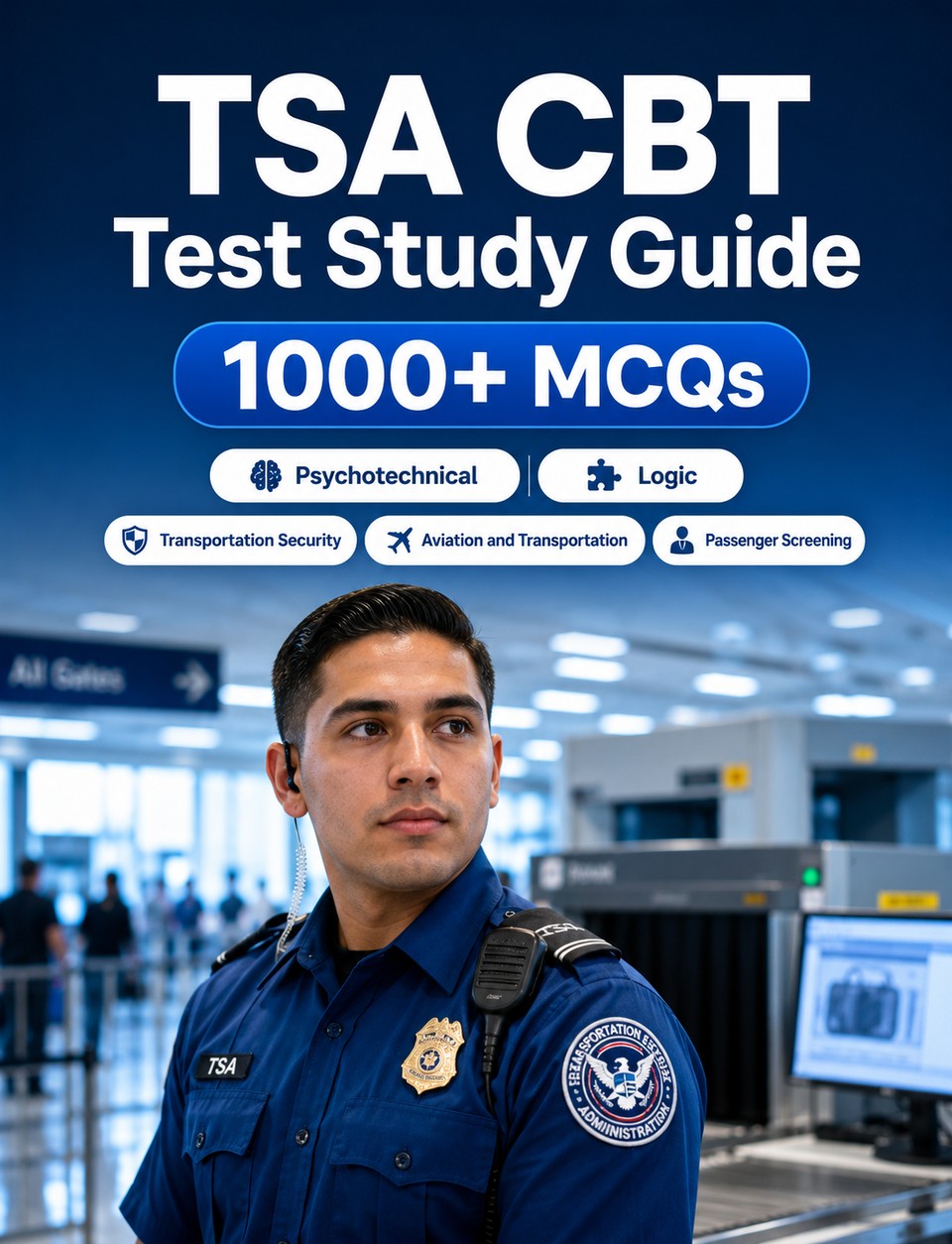
How to pass the TSA CBT Test Study Guide exam
Passing the Transportation Security Officer (TSO) computer-based test is the first critical step toward a career in federal aviation security. With the right preparation strategy, you can confidently navigate the complex screening and situational judgment sections required to succeed.
Create a Structured Study Timeline
Success on the TSA CBT requires consistent preparation rather than last-minute cramming. Aim for a four-week study window, dedicating at least 60 to 90 minutes each day to review core materials. Start by familiarizing yourself with the Transportation Security Administration organizational structure and the Aviation and Transportation Security Act to build a strong foundational knowledge.
During the first two weeks, focus on theory, including security screening protocols and federal aviation regulations. Use the remaining time to immerse yourself in image interpretation exercises and situational judgment scenarios. Our printed prep book includes a QR code inside, granting you exclusive access to online practice tools that simulate the actual exam environment.
Prioritize High-Impact Syllabus Topics
Not all topics carry the same weight. Prioritize your study time by focusing on Prohibited Items and Security Screening Procedures, as these are central to the TSO role. Understanding the specific requirements for checked baggage screening and explosives detection is essential for high-scoring candidates.
Additionally, dedicate significant time to the Code of Conduct and Ethics. The exam frequently tests your ability to make sound decisions in high-pressure environments, so mastering public interaction and customer service standards is just as important as technical security knowledge.
Mastering Image Interpretation and Situational Judgment
The image interpretation portion of the CBT is designed to test your attention to detail under time constraints. Practice by analyzing various X-ray images to identify prohibited items, focusing on shapes, densities, and textures. Consistent daily drills will improve your recognition speed and accuracy.
For situational judgment, avoid looking for the most complex answer. Instead, evaluate each scenario based on the official TSA Code of Conduct and federal security protocols. Always choose the response that prioritizes safety, follows established procedures, and maintains professional communication with passengers.
Utilize Mock Exams to Identify Weak Spots
Mock exams are the most effective way to gauge your readiness and build test-day stamina. Take a full-length practice test at the end of each week to track your progress and identify recurring errors. If you consistently struggle with specific areas like threat assessment or incident management, revisit those chapters in your study guide immediately.
Reviewing your incorrect answers is more important than simply scoring high on a practice test. Analyze why you missed a question—was it a lack of knowledge or a misunderstanding of the prompt? Adjust your study plan to reinforce these weak areas before your official exam date.
FAQ
- How long should I study for the TSA CBT?
- We recommend a minimum of four weeks of consistent study, dedicating 60 to 90 minutes daily to cover all syllabus topics effectively.
- What is the most difficult part of the TSA exam?
- Many candidates find the image interpretation and situational judgment sections the most challenging due to the strict time limits and the need for precise decision-making.
- Does the study guide include practice tests?
- Yes, our printed guide includes a QR code that provides access to online mock exams, helping you practice under realistic testing conditions.
- Should I memorize the federal aviation regulations?
- You should focus on understanding the core principles and security standards rather than rote memorization, as the exam tests your ability to apply these rules in practical scenarios.