How to pass the Paramedic Exam Study Guide exam
Passing the Paramedic certification exam requires more than just memorizing facts; it demands a strategic approach to clinical decision-making under pressure. This guide provides a structured roadmap to help you master complex medical concepts and excel on your exam day.
Creating Your Study Timeline
Consistency is the most important factor in your preparation. Aim for a 12-week study schedule, dedicating at least two hours per day to focused review. Break your timeline into three phases: foundational review, advanced clinical application, and final assessment practice. By spreading your study sessions over several months, you prevent burnout and improve long-term retention of critical information.
Prioritizing High-Yield Topics
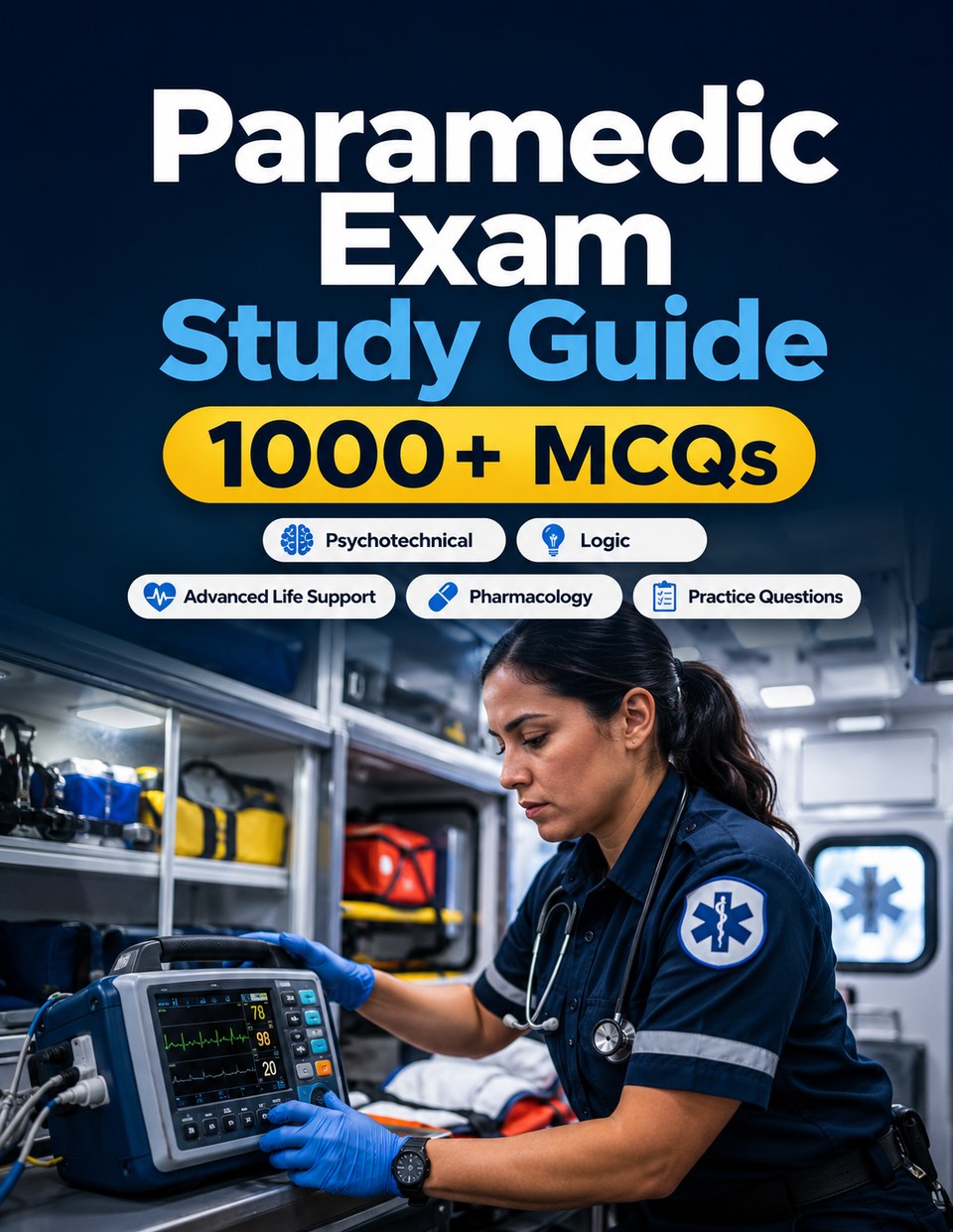
Not all syllabus topics carry the same weight on the exam. Prioritize your study time by focusing on Advanced Life Support protocols, cardiac electrophysiology, and pharmacology, as these form the core of the test. Dedicate extra hours to areas where you feel less confident, such as pediatric advanced life support or complex endocrine emergencies. Our printed prep book is designed to help you organize these topics efficiently and includes a QR code inside for exclusive access to online practice resources.
Mastering Clinical Decision-Making
The exam tests your ability to apply knowledge to real-world scenarios. Instead of passive reading, use active recall techniques to simulate the pressure of a patient encounter. When studying trauma assessment or respiratory emergencies, visualize the steps of the protocol and explain your reasoning out loud. This method reinforces your clinical judgment and prepares you for the multi-step questions common in the actual exam.
The Role of Mock Exams
Mock exams are the best tool for identifying your weak spots. Take a full-length practice exam every two weeks to monitor your progress and get comfortable with the time constraints. After each test, review every single incorrect answer to understand the underlying logic you missed. This iterative process of testing, analyzing, and reviewing is the fastest way to improve your score.
Exam Day Strategy
On the day of the exam, focus on reading each question carefully to identify the specific patient condition and the required intervention. Use a systematic approach: eliminate obviously incorrect answers first, then evaluate the remaining options based on standard ALS protocols. Stay calm, manage your time per question, and trust the preparation you have put in during your study sessions.
FAQ
- How many hours should I study per day?
- For optimal retention, we recommend at least two hours of focused, distraction-free study time daily.
- What is the best way to improve my cardiology score?
- Focus on consistent rhythm strip interpretation and understanding the electrophysiology behind each arrhythmia rather than just memorizing names.
- How do I identify my weak spots?
- Taking full-length mock exams and reviewing your incorrect answers will clearly highlight the clinical areas that require more study time.
- Are the online practice resources included with the book?
- Yes, every printed prep book contains a QR code inside that grants you immediate access to our online practice platform.
- Should I focus on memorization or understanding protocols?
- The exam prioritizes the application of protocols. Focus on understanding the 'why' behind each treatment step to ensure you can adapt to different patient scenarios.