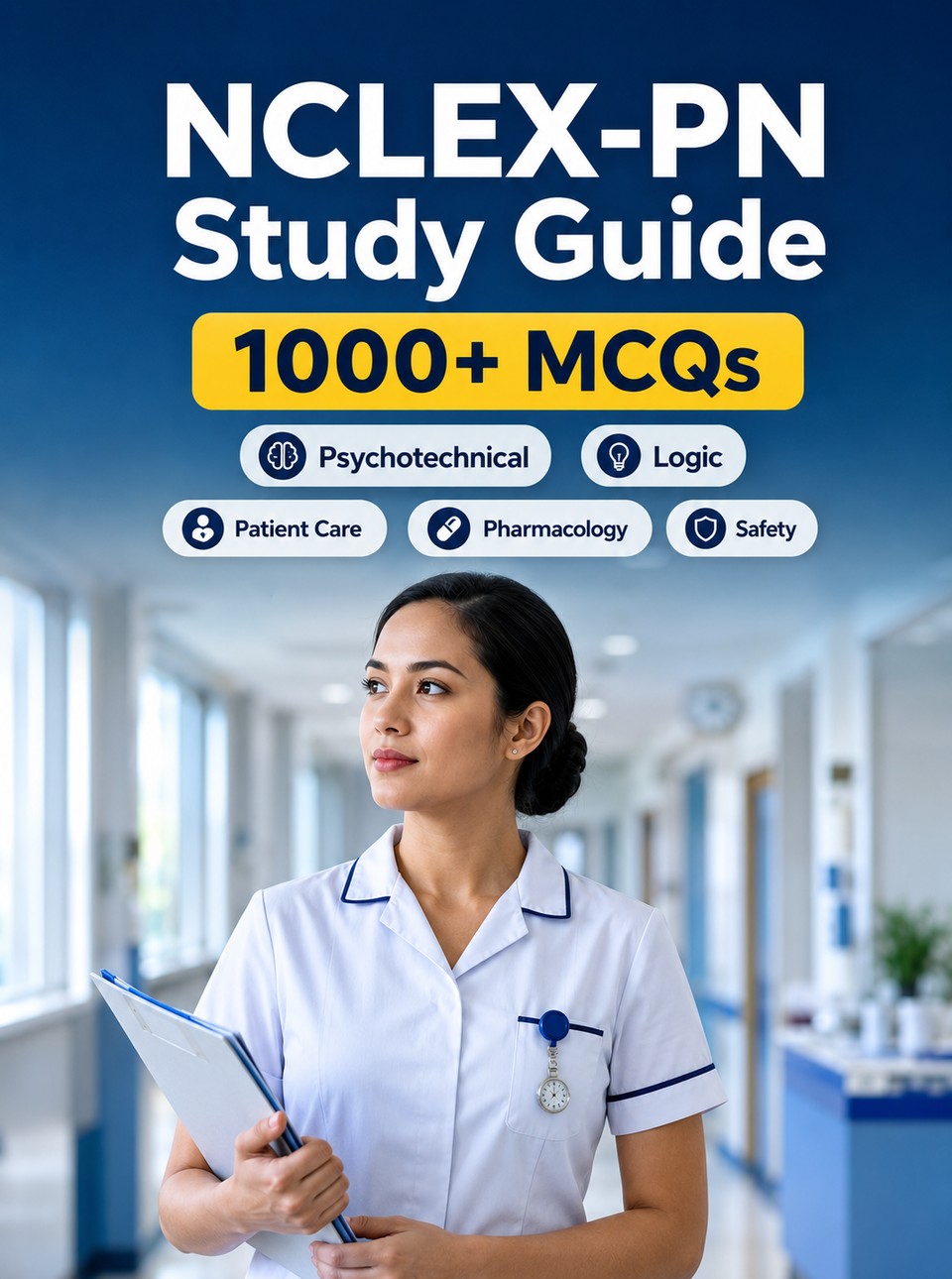
How to pass the NCLEX-PN Study Guide exam
Passing the NCLEX-PN is the final hurdle in becoming a licensed practical nurse and requires a structured, disciplined approach to mastery. By focusing on high-yield nursing concepts and strategic test-taking techniques, you can transform your preparation into a successful result.
Creating Your Actionable Study Timeline
A successful study plan typically spans 8 to 12 weeks, depending on your familiarity with the core nursing curriculum. Aim for 2 to 3 hours of focused study daily, increasing this to 4 hours on weekends. Consistency is more effective than cramming, as it allows for better retention of complex topics like pharmacology and physiological adaptation.
To keep yourself on track, divide your calendar into weekly blocks. Dedicate the first phase to reviewing foundational knowledge, the middle phase to systems-based clinical topics, and the final phase to intensive practice testing. Remember that our printed prep book includes a QR code inside, granting you exclusive access to online practice resources to supplement your offline study sessions.
Prioritizing High-Yield Syllabus Topics
Not all topics carry the same weight on the NCLEX-PN. Prioritize Management of Care and Safety and Infection Control, as these are critical components of safe nursing practice. Ensure you have a firm grasp of nursing fundamentals and basic patient care before moving into specialized areas like pediatric or maternity nursing.
For pharmacology, focus on medication classes, side effects, and safety protocols rather than memorizing every drug name. Understanding the mechanism of action and the nursing responsibility associated with administration will serve you better than rote memorization. Use your study guide to bridge gaps in your knowledge of adult health systems, specifically cardiovascular and respiratory systems.
Identifying and Addressing Weak Spots
The most efficient way to improve your score is to identify your weak spots early through diagnostic testing. After completing a practice quiz, do not just check your score; analyze why you missed specific questions. Was it a lack of content knowledge, or did you misread the question stem?
Keep a dedicated notebook for concepts you consistently get wrong. Revisit these topics weekly until you can explain the rationale behind the correct answer. By actively targeting your areas of struggle, you prevent these gaps from becoming liabilities on the actual exam day.
Mastering Mock Exams and Test Strategy
Simulated testing is essential to build your endurance and confidence. Schedule at least one full-length mock exam every two weeks to mimic the pressure of the testing center. Treat these sessions as if they were the real exam by limiting distractions and strictly adhering to time constraints.
Develop a strategy for approaching multiple-choice questions. Always look for keywords in the prompt, such as first, best, or priority. Eliminate clearly incorrect options immediately to improve your odds. Practicing these techniques under timed conditions will help you remain calm and analytical during the actual NCLEX-PN.
FAQ
- How many hours a day should I study for the NCLEX-PN?
- For most candidates, 2 to 3 hours of focused, high-quality study per day is sufficient. Consistency is more important than the total number of hours.
- What should I prioritize if I am short on time?
- Prioritize Safety and Infection Control, Management of Care, and Pharmacology, as these areas represent a significant portion of the exam content.
- How do I use the online practice access in the book?
- Simply scan the QR code located inside your printed prep book to unlock our digital platform, which provides additional practice questions and performance analytics.
- How often should I take full-length mock exams?
- We recommend taking a full-length mock exam every two weeks to track your progress and improve your test-taking stamina.
- Is it better to memorize facts or understand concepts?
- The NCLEX-PN tests your ability to apply nursing knowledge to clinical scenarios. Understanding the 'why' behind a procedure is far more valuable than memorizing isolated facts.