Common HESI A2 Study Guide exam mistakes
Preparing for the HESI A2 is a significant milestone on your path to nursing school, but many candidates stumble due to avoidable study habits. Understanding these common pitfalls is the first step toward securing the high scores required for a competitive admission process.
Underestimating the breadth of transversal subjects
Many students focus heavily on their strengths while ignoring subjects like vocabulary or grammar. Because the HESI A2 covers a vast range of topics from cellular biology to fundamental arithmetic, a balanced approach is essential. Neglecting any single section can significantly lower your cumulative score.
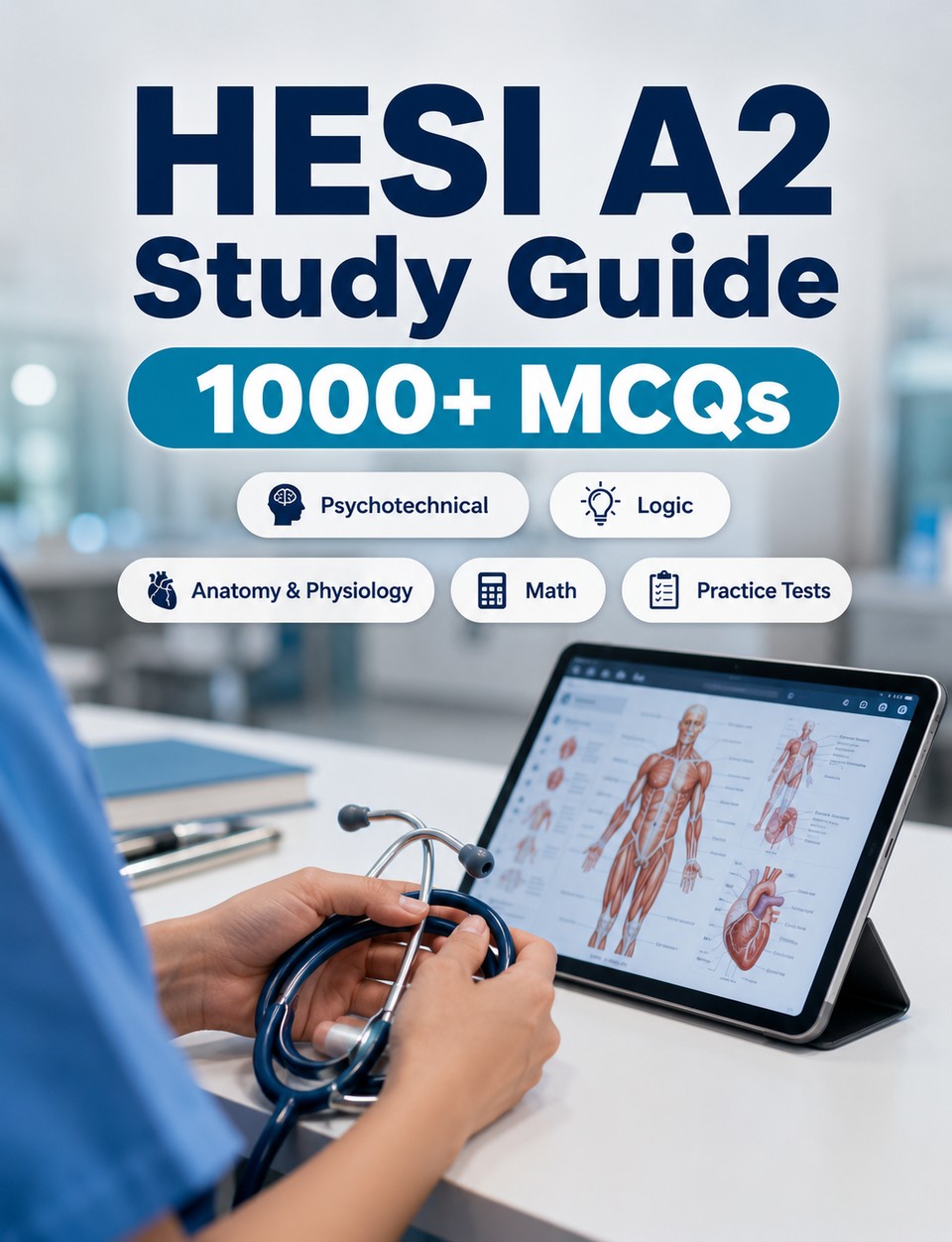
Our comprehensive prep book is designed to cover every syllabus area, including anatomy, physiology, and chemistry. To help you track your progress across all subjects, the printed book includes exclusive access to online practice tests via a QR code found inside the cover.
Poor time management during practice
The HESI A2 is a timed exam, and many candidates fail because they spend too much time on difficult questions, leaving no time for easier ones. Practicing under timed conditions is just as important as learning the material itself.
Use your study sessions to simulate the actual testing environment. By working through our 1000+ multiple-choice questions under strict time limits, you will develop the pacing skills necessary to navigate through sections like respiratory systems or stoichiometry without rushing.
Neglecting foundational concepts in science
A common mistake is attempting to memorize advanced topics like endocrine system regulation or chemical bonding without a solid grasp of the basics. If you do not understand atomic structure, you will struggle with complex chemical reactions.
Ensure you master the fundamental arithmetic and basic biological processes before moving to complex physiological systems. Building a strong foundation ensures that you can reason through difficult questions rather than relying solely on rote memorization.
Ignoring the importance of active recall
Passive reading of textbooks is one of the least effective ways to prepare for a high-stakes exam. Many students read through notes repeatedly but fail to test their actual retention of the material.
Instead, focus on active recall by utilizing practice tests and flashcards. Challenging yourself to retrieve information from memory forces your brain to strengthen neural pathways, which is critical for recalling complex details about the skeletal, muscular, or urinary systems during the actual exam.
Overlooking the role of physical and mental wellness
Nursing school admission is a marathon, not a sprint. Candidates often neglect their physical health, such as sleep and exercise, in the final weeks leading up to the test. Mental fatigue can lead to careless errors in simple math or reading comprehension sections.
Maintaining a consistent study schedule that includes breaks is vital for cognitive performance. Treat your preparation like a professional commitment, ensuring you are well-rested and focused when tackling the most challenging chapters of your study guide.
FAQ
- How many sections are included in the HESI A2 exam?
- The HESI A2 typically covers eight core areas, including anatomy, physiology, biology, chemistry, math, vocabulary, grammar, and reading comprehension.
- Is it better to study one subject at a time or mix them up?
- Interleaving your study sessions—mixing subjects like math and biology—is proven to improve long-term retention compared to focusing on one subject for days at a time.
- How can I access the online practice tests mentioned in the book?
- Simply locate the QR code inside your printed prep book to unlock instant access to our online portal featuring additional practice questions.
- What is the best way to improve my score in the math section?
- Focus on mastering fractions, decimals, and percentages, and practice solving word problems under timed conditions to improve your speed and accuracy.
- How long should I spend preparing for the HESI A2?
- Most successful candidates dedicate at least four to eight weeks of consistent, daily study to cover all syllabus topics thoroughly.