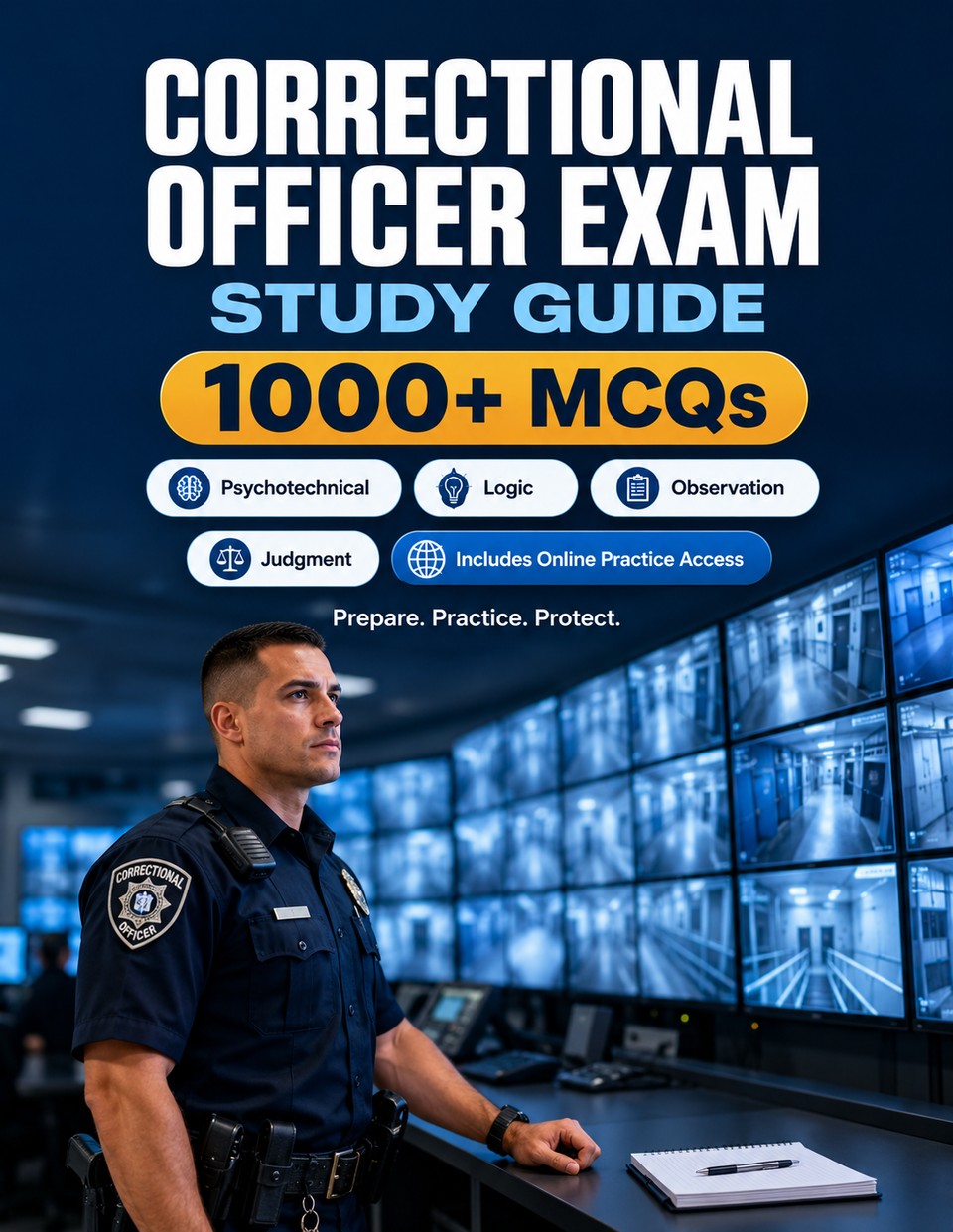
Correctional Officer Exam Study Guide selection process
The journey to becoming a correctional officer is a rigorous path designed to identify the most qualified candidates for public service. Understanding each stage of the selection process is essential for success in these highly competitive civil service examinations.
Phase 1: Written Examination
The written test is the primary hurdle, focusing on your ability to handle workplace scenarios, report writing, and logical judgment. Candidates must demonstrate proficiency in constitutional foundations, inmate rights, and security protocols.
Our Correctional Officer Exam Study Guide provides 1000+ MCQs to help you master these topics. Each printed book includes a QR code inside, granting you exclusive access to additional online practice tests to simulate real exam conditions.
Phase 2: Psychotechnical and Personality Assessment
This stage evaluates your psychological suitability for the high-stress environment of a correctional facility. Examiners look for emotional stability, integrity, and the ability to make sound decisions under pressure.
Expect a series of personality inventories and cognitive tests that measure your behavioral tendencies. Preparation involves familiarizing yourself with the core ethical standards and professional conduct expected of officers in a secure setting.
Phase 3: Physical Fitness and Medical Evaluation
Correctional work requires a high level of physical readiness to respond to emergency situations and maintain facility security. The sport test typically includes timed events such as running, push-ups, and agility drills.
The medical evaluation follows, where candidates undergo a comprehensive health screening to ensure they meet the physical standards required for duty. It is vital to maintain peak physical condition throughout the entire selection window.
Phase 4: Oral Interview and Final Ranking
The final stage is often an oral board interview where candidates interact with a panel of senior officers or HR professionals. You will be asked to apply your knowledge of disciplinary procedures, contraband detection, and crisis management to hypothetical scenarios.
After all phases are complete, candidates are placed on a final ranking list based on their cumulative scores. Positions are typically offered to those at the top of the list, making every point in the written and physical stages critical to your overall success.
FAQ
- How long does the typical selection process take?
- The duration varies by jurisdiction, but the entire process from the initial written exam to the final ranking usually spans between six to twelve months.
- What is the pass logic for the written exam?
- Most exams use a scaled scoring system where you must achieve a minimum passing grade to advance. Because these are competitive, scoring significantly higher than the minimum is recommended to secure a top rank.
- Are the physical tests standardized?
- Yes, physical fitness requirements are standardized based on gender and age groups to ensure all officers can perform essential job functions like restraint and emergency response.
- What should I prioritize when studying for the written test?
- Focus on the core syllabus topics such as use of force procedures, inmate classification, and administrative regulations, as these form the bulk of the situational judgment questions.