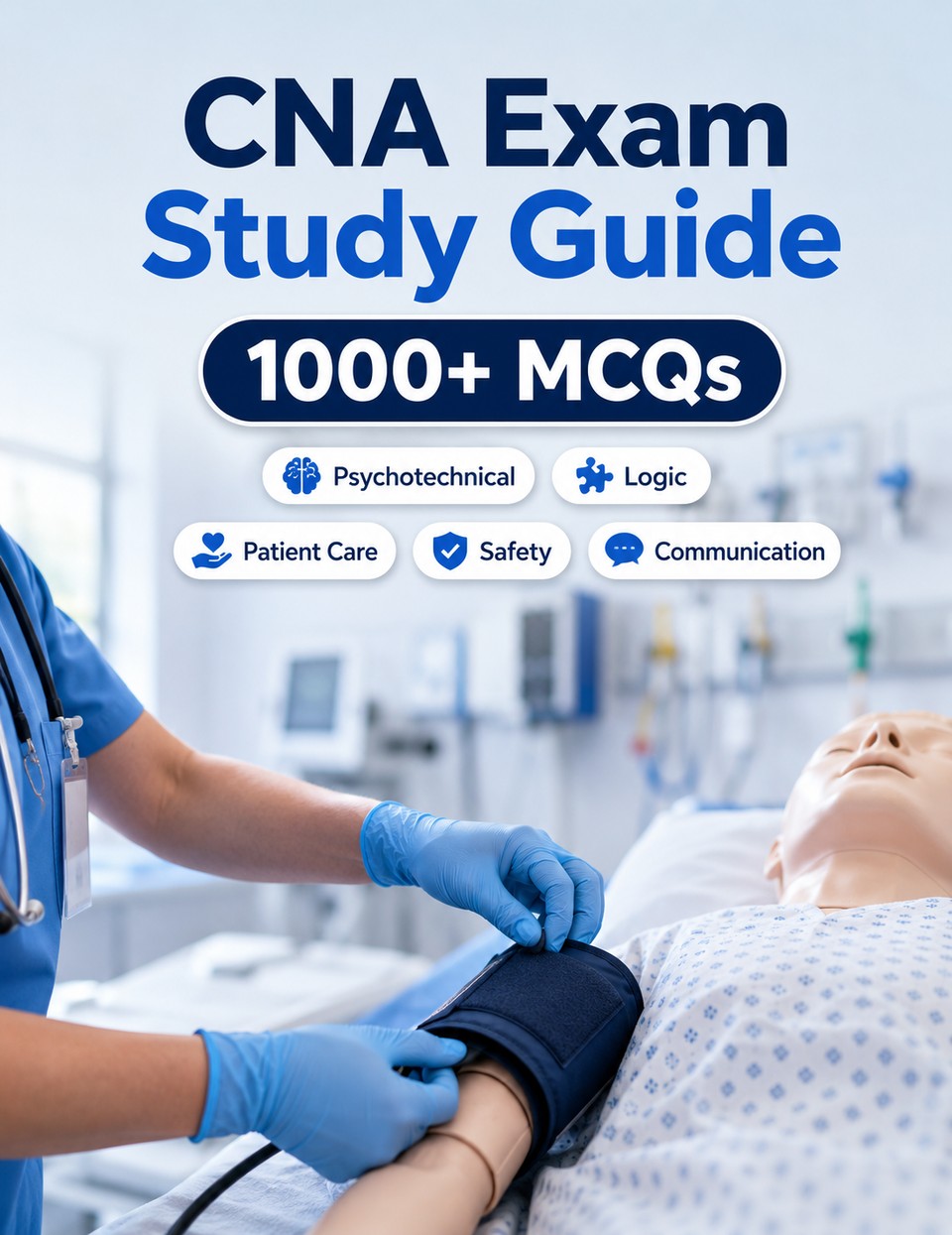
Common CNA Exam Study Guide exam mistakes
Preparing for the Certified Nursing Assistant exam requires more than just memorizing facts. Many candidates struggle because they overlook critical testing strategies that are just as important as the clinical knowledge itself.
Underestimating Transversal Skills
A frequent mistake is focusing solely on technical nursing skills while ignoring transversal competencies. Candidates often fail to realize that the exam evaluates how you apply communication, ethics, and patient advocacy across every scenario. You must demonstrate professional judgment alongside your clinical knowledge to succeed.
Poor Time Management During the Written Exam
Many test-takers get stuck on difficult multiple-choice questions, leaving them insufficient time to complete the rest of the paper. It is essential to pace yourself and flag complex questions to revisit later. Our printed prep book, which includes online practice access via an internal QR code, helps you simulate real exam conditions to build your speed.
Neglecting Clinical Skill Accuracy
In the clinical skills portion, candidates often rush through procedures to save time, leading to critical safety violations. Examiners look for adherence to infection control, proper body mechanics, and clear communication with the patient. Skipping a single step, such as identifying the patient or locking the bed wheels, can result in an automatic failure.
Overlooking Infection Control and Safety
Standard precautions and emergency response procedures are the foundation of the CNA role. A common error is failing to maintain a sterile environment or neglecting hand hygiene during a demonstration. Always prioritize patient safety and infection control protocols above all else during your practical evaluation.
Failing to Practice with Realistic Scenarios
Studying theory is helpful, but it does not replace the need for active practice. Many candidates fail because they have not practiced enough mock scenarios covering patient hygiene, mobility, or mental health support. Consistent repetition using high-quality materials is the most effective way to identify your weak points before the actual exam day.
FAQ
- What is the most common reason for failing the clinical skills exam?
- The most common reason is skipping mandatory safety or infection control steps, such as handwashing or verifying patient identity, even if the rest of the procedure is performed correctly.
- How can I improve my time management for the written portion?
- Practice with timed mock exams to get used to the pressure. Do not spend more than a minute on any single question; if you are unsure, mark it and move on to ensure you finish the entire test.
- Are the clinical skills graded strictly?
- Yes, examiners use a specific checklist for each skill. You must perform every required step in the correct order to pass, as these protocols are designed to ensure patient safety.
- Is it important to talk to the patient during the clinical exam?
- Absolutely. Communication is a graded component of the clinical skills exam. You must explain what you are doing to the patient to show that you are providing respectful and informed care.